The House
It began in other people's wardrobes.
I can't remember a time when clothes didn't matter to me. In Kolhapur, getting dressed is never a small thing. A wedding is a week of colour. A festival is a reason to bring out the good silk. Every family keeps a trunk of sarees, and every saree has a story folded into it.
Long before styling was my work, it was what people asked me to do. A cousin's sangeet. An aunt's anniversary. A friend's first big day at a new job. I would open their wardrobes, find the piece they had forgotten they owned, and build the whole look around it. Somewhere along the way, those evenings became a practice.
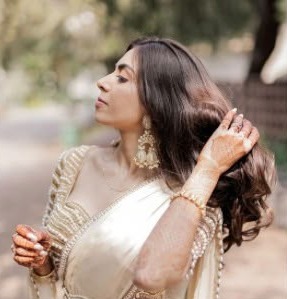
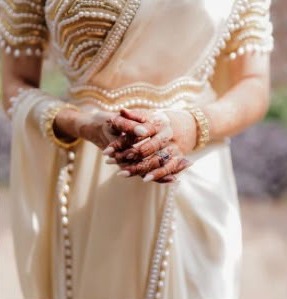
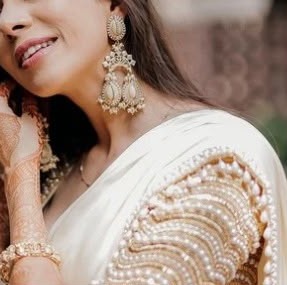
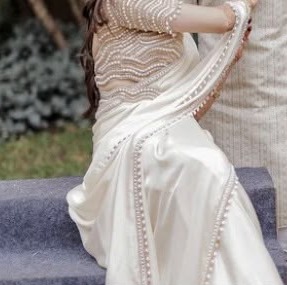
When it was my turn to be the bride, I styled my own wedding: ivory, pearl and a quiet kind of shine. Those photographs are the first pages of my portfolio. They hold what I believe about dressing a bride. She should look like herself, only more so. And she should be able to move.
How I work
Today I style brides and their families, brands, creators and men. I run every job the way a couture atelier does, because the people I dress deserve that care.
The brief. Occasion, venue, traditions, comfort, and what you never want to wear. Written down and confirmed.
The moodboard. Three directions. You choose one.
The pull. Pieces sourced from designers, boutiques, jewellers and weavers.
The fitting. Every look tried, photographed and altered. Nothing is final without one.
The look book. One page per event, shared with your hair and makeup team.
The day. I arrive early, with a full kit, and stay until the last drape is set.
The credits. Every designer and maker named, every piece returned with care.
Maharashtra has some of the most beautiful craft in the country. I want it seen the way Paris sees couture: with the maker's name beside it.
Simran